2Remuneration philosophy and principles
PolyPeptide’s remuneration philosophy is rooted in its commitment to fostering a corporate culture that offers employees dynamic working conditions and meaningful opportunities to grow, contribute and achieve shared objectives. This approach supports long-term customer loyalty through excellence in peptide technology, quality, value, service, and support—pillars essential to the Group’s enduring success.
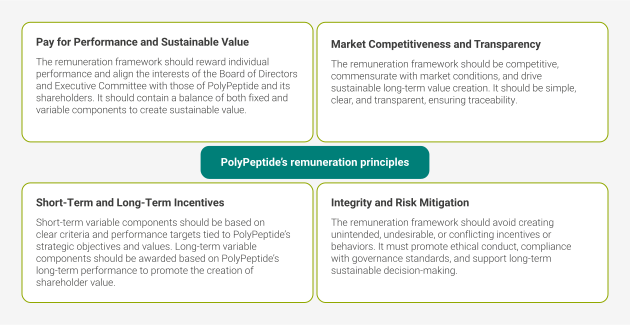
In line with this approach, and to provide transparent insight into how compensation supports PolyPeptide’s strategy and governance, the Group’s remuneration principles, as overseen by the RNC, are set out below.
The RNC regularly benchmarks the Group’s compensation system against comparable companies every two to three years (or more frequently if required). This process ensures that remuneration remains aligned with established principles and competitive enough to attract and retain talent. In conducting these reviews, the RNC evaluates whether external advisors should be engaged, confirms the validity of peer groups used in prior studies, and considers factors such as internal pay structures, individual profiles (e.g., skills, experience, seniority), PolyPeptide’s global footprint, and the increasing complexity of its industry. Based on these assessments, the RNC may recommend to the Board adjustments to base salaries or the structure and proportion of compensation components for proposal at the subsequent general meeting.
In 2025, the RNC undertook a review of Board remuneration using internally compiled data from (i) executive studies and reports and (ii) disclosures of Swiss companies of similar size and structure, (e.g., considering sector, employee base, revenue, market capitalization, business model, and geographic presence).7 This analysis confirmed that PolyPeptide maintained its positioning between the tenth and twenty-fifth percentile within the Swiss peer group, consistent with 2024 (see section 2 “Remuneration philosophy and principles “ of the Remuneration Report 2024). After examining the available data, the RNC observed that PolyPeptide’s aggregate Board remuneration trended moderately higher. At the same time, the RNC remains committed to the Group’s strategic objectives and recognizes the importance of attracting and retaining highly qualified directors to support PolyPeptide’s future growth. In addition, at least half of the Board’s remuneration is delivered in shares, ensuring strong alignment between the Board’s interests and those of the Company’s shareholders in driving PolyPeptide’s success (see also section 4.1 “Remuneration approach” of this Remuneration Report). On this basis, the RNC concluded that no changes to Board remuneration were warranted at this time.
To ensure competitiveness with the market, the compensation of the Executive Committee was also benchmarked in 2025 against internally compiled data from (i) executive studies and reports, (ii) previously obtained European benchmark data (adjusted for inflation between 2022 and 2025)8 and (iii) disclosures of Swiss companies of similar size and structure, (e.g., considering sector, employee base, revenue, market capitalization, business model, and geographic presence).7 PolyPeptide generally ranked around the twenty-fifth percentile, with higher aggregate compensation for certain roles reflecting market competitiveness and the Group’s growth strategy. The RNC reviewed the results while taking into account PolyPeptide’s ambitious growth strategy and the need to attract and retain highly qualified executives in a competitive international labor market. Based on this assessment, the RNC concluded that no changes to the aggregate remuneration of the Executive Committee were warranted at this time.
PolyPeptide currently does not maintain formal shareholding requirements for Executive Committee members, largely due to the transformational period the Group has undergone. Nevertheless, the Board and the RNC are actively considering whether to introduce such requirements in the future as part of ongoing governance and alignment initiatives. At present, all members of Executive Committee have a long‑term economic interest in the Company through their participation in the LTIP, which reinforces the alignment of their interests with those of shareholders.