Social information
Own workforce
Own workforce refers to PolyPeptide’s working conditions among its own employees. It encompasses the sub-topics health and safety, social dialogue, collective bargaining, training and skills development, gender equality and equal pay of work of equal value, measures against violence and harassment in the workplace, and diversity.
PolyPeptide’s manufacturing process, especially the handling of hazardous substances, entails potential health and safety risks for employees that require specific precautions. The Group provides targeted training programs covering GMP requirements, environmental protection, workplace health and safety, ethical behavior and compliance, whistleblower programs as well as cyber security and data protection.
PolyPeptide supports fair employment by promoting gender equality and equal pay, implementing procedures against violence and harassment, and fostering diversity.
Impacts, risks and opportunities
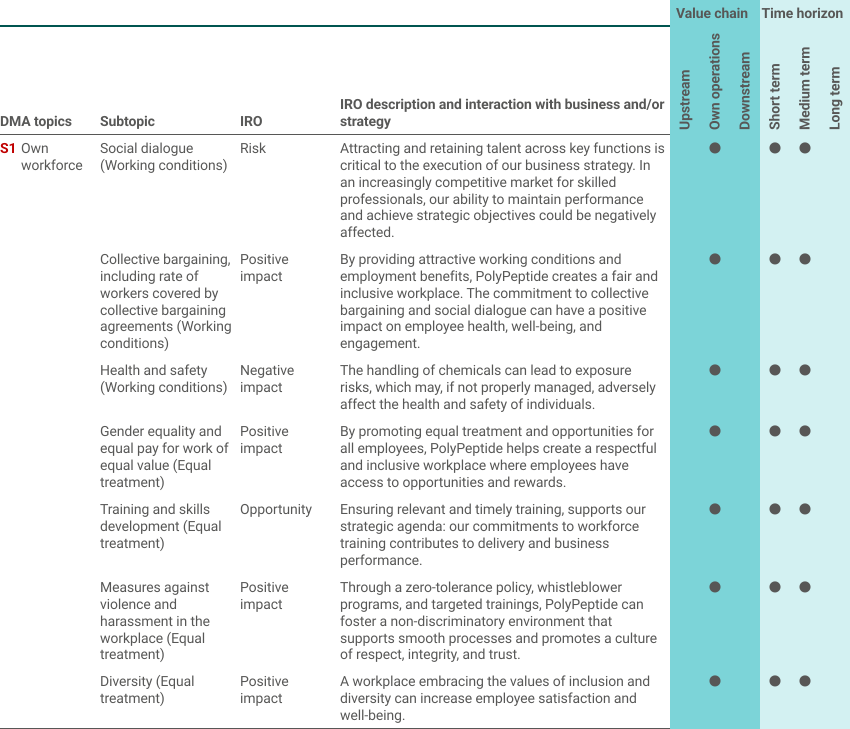
Our work matters to millions of patients worldwide. PolyPeptide’s success depends on a skilled and engaged workforce to operate under GMP standards and drive innovation. Attracting and retaining talent is critical in a competitive market, as shortages of qualified employees could impact our ability to deliver on strategic objectives.
PolyPeptide fosters a culture of respect and integrity through zero-tolerance policies on unethical and illegal behavior, supported by whistleblower programs, and targeted training. We promote inclusion and diversity, offer attractive working conditions and benefits, and support social dialogue to enhance engagement and well-being. Our commitment to ongoing training ensures employees have the skills needed to maintain compliance and deliver on our strategic goals.
Our operations involve handling hazardous substances, which can pose health and safety risks if not managed properly. To mitigate these risks, we maintain strict EHS standards, provide continuous GMP and safety training, and implement measures to protect employees and non-employees working on-site in innovation and manufacturing environments. Our commitment to workforce training strengthens operational excellence and supports overall business performance.
Policies
PolyPeptide’s values are embedded in its Code of Business Conduct and Ethics. We foster a workplace built on respect, integrity, inclusion and diversity and maintain a zero-tolerance policy for harassment, bullying, or discrimination. The Group will not discriminate against any employee or applicant with regard to gender, gender identity or expression, age, ethnicity, skin color, sexual orientation, religion, family or marital status, pregnancy, political activity, disability or any other characteristic protected by applicable law. We strive to uphold human rights and freedom of association, provide equal employment opportunities, and maintain alignment with all relevant labor and safety regulations. Our global employment principles reflect these values.
Our commitment extends to responsible practices across our supply chain. Through our Global Supply Chain Policy on Child Labor, we promote transparency and apply due diligence to prevent child labor in our operations and among high-risk tier 1 raw material suppliers.
In furtherance of the PolyPeptide EHS Group Policy Statement that provides the overall framework for our commitments and action aimed at employee health and safety as well as environmental stewardship, the Global EHS Management Plan sets out the health, safety and environmental requirements that apply to all activities and employees at PolyPeptide. It provides guidance for local EHS programs and procedures, designed to protect our workforce, minimize risks, and promote a safe and healthy working environment.
We do not currently have specific policy commitments that cover specific groups within our own workforce.
Processes for engaging with our workforce
We actively engage with our workforce, both directly and indirectly, through multiple processes that inform our decision-making. The primary channel for direct feedback is our annual employee engagement survey. This survey enables us to continuously monitor and improve PolyPeptide as a workplace, and all teams work proactively with the results each year to drive meaningful improvements.
More than 1,000 employees took part in the employee engagement survey 2025, yielding a participation rate of 84% (2024: 86%). The overall engagement score was 3.7, on a scale from 1 to 5, with 5 being the highest and 1 being the lowest (2024: 3.6). The survey revealed “Relationships with Colleagues”, “Meaningful Participation” and “Relationship with Manager” as strengths of PolyPeptide’s workplace culture, while “Feedback and Communication”, “Workplace and Tools”, and “Autonomy” scored lower. The specific results of the engagement survey were made available to the respective teams in order to further develop employee engagement.
Other channels and platforms for engagement include the Group’s intranet, global and local townhall meetings, as well as themed workshops and campaigns. In addition, we maintain ongoing dialogue with workers’ representatives. In Braine, Malmö and Strasbourg, employees are represented by local unions and associations, which help incorporate their perspectives into PolyPeptide’s approach to employee well-being, workplace conditions, and compliance with labor standards.
To manage individual performance and development, the Group maintains annual performance evaluation and employee development processes. Under the operational responsibility of local Human Resource managers, line managers are requested to conduct suitable discussions with their team members.
Processes to remediate negative impacts and channels for own workforce to raise concerns
We apply established processes to address and remediate negative impacts. For an overview of the channels available to our workforce for raising concerns, including whistleblowing mechanisms, see the section on Business conduct.
Actions
Our key actions related to health and safety (i.e., the identified potential negative impact) are described below. All employees engaged in the manufacturing process go through training in compliance with GMP requirements and health and safety regulations. The individual GMP training includes self-study, classroom teaching, and practical on-the-job training, which is documented and subject to regular refreshers. PolyPeptide believes that continuous learning and professional development are crucial for both individual and organizational success. We are committed to providing training opportunities and resources to support individual growth through annually reviewed development plans, although we currently do not track total training hours.
To achieve its EHS objectives, PolyPeptide has deployed a three-year EHS action plan which includes a comprehensive EHS awareness program covering:
- Ongoing training for all employees;
- Access to tools that empower employees to report hazardous situations; and
- Systematic identification and management of operational risks.
In recent years, the Group has established a Global EHS Policy and implemented escalation forms to share lessons learned from incidents and best practices across all sites, fostering continuous improvement. PolyPeptide has introduced tools to proactively monitor regulatory changes and deployed a system for managing safety data sheets, providing employees with easy access to up-to-date information.
For the 2026–2028 period, PolyPeptide’s priorities include further strengthening its EHS culture through an EHS employee awareness program, from onboarding to periodic refreshers on specific topics and an EHS training program for subcontractors operating at manufacturing sites. The plan also emphasizes harmonizing EHS processes across the Group, by, inter alia, developing guidance for event investigation, reporting, and sharing lessons learned, as well as standardizing risk assessment processes to ensure employee health and safety.
Collectively, these actions contribute to PolyPeptide’s expected outcomes by strengthening the Group’s ability to prevent and mitigate negative impacts on its own workforce while enhancing overall organizational resilience.
Targets and metrics
Characteristics and diversity metrics of PolyPeptide’s employees
In 2025, the average number of FTEs was 1,395 compared to 1,291 in 2024. 146 employees left the Group during the reporting period, resulting in an employee turnover of 9.94%. Metrics, including breakdowns of the employees by geography, job category, site, age, experience, qualification, and gender are presented in the tables below.
While PolyPeptide is not reporting quantitative targets for all material topics of its Own workforce, the Group is committed to establishing relevant measurable outcome-oriented targets in line with its objectives while we track the effectiveness of our policies and actions in relation to identified IROs.
|
Number of employees (HC) |
2025 |
in % |
2024 |
in % |
|
Total |
1,469 |
100% |
1,362 |
100% |
|
Baar (CH) |
16 |
1% |
11 |
1% |
|
Strasbourg (FR) |
157 |
11% |
152 |
11% |
|
Braine (BE) |
457 |
31% |
454 |
33% |
|
Malmö (SE) |
445 |
30% |
381 |
28% |
|
Ambernath (IN) |
134 |
9% |
110 |
8% |
|
San Diego (US) |
61 |
4% |
65 |
5% |
|
Torrance (US) |
199 |
14% |
189 |
14% |
|
Average number of FTE |
2025 |
2024 |
|
Total |
1,395 |
1,291 |
|
|
|
|
|
By geography |
|
|
|
Switzerland |
15 |
10 |
|
France |
155 |
139 |
|
Belgium |
442 |
430 |
|
Sweden |
403 |
350 |
|
India |
123 |
101 |
|
USA |
257 |
261 |
|
|
|
|
|
By job category |
|
|
|
Production |
786 |
722 |
|
Marketing and sales |
20 |
18 |
|
Research and development |
167 |
168 |
|
General and administration |
114 |
103 |
|
Quality control |
178 |
161 |
|
Quality assurance |
130 |
119 |
|
By age (HC) |
2025 |
2024 |
|
Age under 30 years old |
236 |
224 |
|
Age 30-50 years old |
888 |
822 |
|
Age over 50 years old |
345 |
316 |
|
|
|
|
|
By experience (HC) |
|
|
|
<2 years |
30% |
33% |
|
2 to 10 years |
46% |
41% |
|
>10 years |
24% |
26% |
|
|
|
|
|
By qualification (HC) |
|
|
|
PhD |
7% |
7% |
|
Academic |
64% |
63% |
|
Non-academic |
29% |
30% |
|
Gender diversity 1 (HC) |
2025 |
2024 |
|||||
|
|
m |
f |
Total (absolute) |
m |
f |
Total (absolute) |
|
|
Diversity of governance bodies |
Board of Directors |
67% |
33% |
6 |
83% |
17% |
6 |
|
Executive Committee 2 |
75% |
25% |
4 |
75% |
25% |
4 |
|
|
|
Management 3 |
69% |
31% |
225 |
66% |
34% |
232 |
|
By gender split m/f (HC) |
2025 |
2024 |
||
|
|
m |
f |
m |
f |
|
Production |
75% |
25% |
76% |
24% |
|
Other functions |
51% |
49% |
51% |
49% |
|
Number of employees by employment characteristics (HC) |
2025 |
||
|
|
m |
f |
Total |
|
Number of permanent employees |
932 |
508 |
1,440 |
|
Number of temporary employees |
17 |
12 |
29 |
|
Number of non-guaranteed hours employees |
0 |
0 |
0 |
|
Total employees |
949 |
520 |
1,469 |
|
Remuneration metrics |
2025 |
|
Gender pay gap |
4.2% |
|
Remuneration ratio |
38 |
Collective bargaining coverage
The number of employees covered by collective bargaining agreements by the end of 2025 was 72% (2024: 72%), representing all employees in Belgium, Sweden, and France that are covered by collective agreements.
Health and safety targets and metrics
PolyPeptide is committed to building a strong safety culture across all its sites, with the ambition to achieve zero lost-time injuries (LTI) and continuously lower the severity rate year over year to ensure a safer and healthier workplace for all employees. The Group prioritizes the protection of the health and safety of its employees, both physically and mentally.
In 2025, the Group incurred 17 LTI (2024: 14), resulting in 0.25 lost working days per employee (2024: 0.09). Zero fatalities as a result of work-related injuries and ill health were recorded during 2025. As part of PolyPeptide’s ongoing commitment, the Group continued its health and safety programs at the manufacturing sites in 2025, including awareness initiatives and practical accident prevention trainings. In addition, the sites held practical trainings with emergency responders.
In addition, the Group launched the Safety Days/Safety Week initiative at several sites, with full implementation across 100% of sites targeted by 2026.
|
Health and safety metrics related to own employees |
2025 |
|
Percentage of own workforce at manufacturing sites covered by the health and safety management system |
100% |
|
Number of fatalities as a result of work-related injuries or ill health |
0 |
|
Recordable work-related accidents |
17 |
|
Rate of recordable work-related accidents (LTI/FTE) |
0.01 |
Incidents, complaints and severe human rights impacts
There are no confirmed cases of incidents of discrimination, including harassment, and no reported cases of severe human rights impacts and no related fines, penalties and compensation for damages.
See also section Business conduct for number of whistleblower reports.
Accounting policies
Characteristics of employees and non-employees
The identified material impacts and risks primarily relate to our own workforce, which includes both employees and non-employees.
Employees refer to individuals working part-time or full-time under a contractual agreement with PolyPeptide. Employee data is shown as headcount (excludes apprentices, interns, students, trainees, contract workers, and inactive workers) or standard full-time equivalent (FTE) based on records from the relevant HR systems at the end of the reporting period.
Non-employees consist of individuals engaged under a fixed-term contract. This group consists of self-employed contractors or individuals employed by third parties who are part of the operational business performing tasks similar to those of PolyPeptide’s employees, on-site in research and/or manufacturing environments. PolyPeptide does currently not report the number of non-employees.
All members of our own workforce who could be materially impacted by PolyPeptide are included within the scope of our social disclosures. However, the nature of impacts, risks, and opportunities varies by roles and context. Health and safety considerations, in particular, primarily affect employees in innovation and operational functions, as these roles involve greater exposure to potentially hazardous situations and materials compared to those in office settings.
Employee turnover
The total number of permanent leavers in 2025 is calculated relative to the headcount per 31 December 2025. Employees who leave voluntarily or due to dismissal, retirement, or death in service are included in the calculation.
Training metrics
While we track participation in trainings provided, PolyPeptide does not currently track the total number of training hours for all employees or participation rates in development plan reviews.
Remuneration metrics
Gender pay gap is defined as the difference of average pay levels between female and male employees, expressed as percentage of the average pay level of male employees. Remuneration metrics are calculated based on compensation rates converted to EUR in relation to hours worked. Figures are based on gross pay as shown on pay slips and include worked hours plus paid absences (e.g., vacation) and any taxable benefits. Compensation is reported without adjustments for purchasing power differences between countries and is presented by gender only.
Calculations include all employees active as of 31 December 2025. Individuals with zero worked hours during the year are excluded. Employees without gender designation are also excluded.
Recordable work-related accidents
Recordable work-related accidents are reported as Lost Time Injury (LTI). LTI refers to a work-related injury or illness that prevents an employee from performing their normal job duties and results in them missing at least one full workday or shift after the incident date, requiring time off for recovery, even if assigned modified work, and counting towards lost workdays for tracking serious incidents.
Workers in the value chain
Safety of workers in the value chain refers to health and safety, meaning the conditions under which work is performed throughout PolyPeptide’s value chain, including physical conditions.
PolyPeptide maintains a network of several hundred direct suppliers of raw materials, capital goods, and services. For most of these suppliers, PolyPeptide’s addressable spend volume represents a relatively small share of the supplier’s overall revenue, which limits the Group’s influence on their practices.
Impacts, risks and opportunities
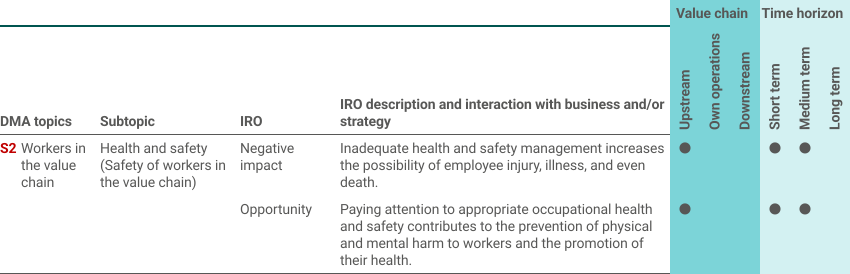
PolyPeptide maintains a global network of over 430 direct raw material suppliers. In 2025, the top 30 direct raw material suppliers together accounted for around 80% of the total material spend. Where feasible, PolyPeptide sources its needed materials regionally, supporting environmental sustainability as well as local economies and communities.
We are committed to ensuring fair and safe working conditions across our value chain. PolyPeptide actively assumes its responsibility to respect human rights, and aims to ensure fair treatment of workers within its own operations and throughout its network of commercial partnerships. This includes prohibiting child labor and promoting safe and ethical working conditions across the supply chain. Insufficient supply chain engagement can lead to adverse effects on workers and may harm the communities from which PolyPeptide sources. Furthermore, inadequate health and safety management at our suppliers increases the possibility of worker injury, illness, and even fatalities. At the same time, based on the DMA, PolyPeptide has not identified material actual or potential impacts on specific categories of workers in the value chain.
To mitigate these risks, PolyPeptide emphasizes adequate diversification of vendors, clear specifications and procedures, and direct supplier engagement. These measures strengthen operational resilience and promote ethical behavior and legal compliance along its value chain, ultimately protecting the Group’s reputation.
Policies
PolyPeptide maintains a Global Supply Chain Policy on Child Labor which sets out how the Group meets its due diligence and transparency obligations across its supply chain. The policy defines the Group’s child labor due diligence processes and its associated reporting and management systems. This policy is referenced in PolyPeptide’s Code of Business Conduct and Ethics as well as the Supplier Code of Conduct that applies to all activities within our upstream value chain.
PolyPeptide’s Supplier Code of Conduct establishes strict expectations for ethical, legal, and socially responsible practices across its supply chain, emphasizing respect for internationally recognized labor and human rights. It mandates freely chosen employment, explicitly prohibiting forced, bonded, or prison labor, as well as all forms of child labor and human trafficking. Suppliers must uphold fair treatment of workers, comply with ILO standards and UN Global Compact principles, and provide safe, healthy working conditions. The Supplier Code of Conduct requires transparent grievance mechanisms, enabling employees to report concerns confidentially and without retaliation, and obliges suppliers to investigate and remediate violations. These commitments aim to ensure that workers in PolyPeptide’s value chain are protected from exploitation and treated with fairness, reinforcing the Group’s sustainability objectives and global compliance standards.
In furtherance of this, we assess all suppliers in the following areas to ensure we work only with suppliers who understand and acknowledge our Supplier Code of Conduct:
- Fair and Ethical Business Practices – our Supplier Code of Conduct outlines the ethical standards and fair business practices by which we conduct our business, and we expect our suppliers to adopt similar principles.
- Health & Safety– we expect our suppliers to adopt management practices in respect of Health & Safety which provide a high level of safeguarding for their workers.
- Environmental Protection – we expect suppliers to maintain effective policies, processes and procedures to minimize their environmental impact.
- Human Rights – we expect our suppliers to develop and implement policies and procedures that protect human rights within their operations and to encourage their own suppliers to do the same.
- Compliance with Laws and Regulations – we expect our suppliers to respect and follow the laws, rules and regulations of the cities, states and countries in which they operate, this includes adherence to our Global Supply Chain Policy on Child Labor and Global Anti-Corruption and Anti-Bribery Policy.
Actions
Operating within a highly regulated GMP business environment, PolyPeptide maintains procedures to approve and qualify critical suppliers based on the criticality of the materials or services provided. Its Supplier Code of Conduct is published on the corporate website, and suppliers are expected to conduct their business in compliance with, inter alia, applicable local, national, and international laws and regulations, contractual agreements, and consistent with internationally recognized sustainability standards.
The instruments that PolyPeptide may use to identify and assess any risks of Child Labor in its supply chain are described in the Global Supply Chain Policy on Child Labor. The Group carries out a risk-based assessment to anticipate, avoid, or mitigate potential or actual adverse impacts associated with its supply chain.
PolyPeptide requires its suppliers to acknowledge and comply with its Supplier Code of Conduct and the Global Supply Chain Policy on Child Labor. During 2025, PolyPeptide introduced an automated distribution and acknowledgement process of the Supplier Code of Conduct through its Supplier Management System.
Process for engaging with value chain workers
We maintain both direct and indirect engagement with supplier representatives through ongoing interactions across our organization and procurement functions as well as supplier audits.
With the support of a multinational assurance, inspection, product testing and certification company, PolyPeptide began engaging with selected high-risk tier 1 raw material suppliers through a questionnaire based on ISO26000 in 2023. Suppliers are selected using a risk-based approach, focused on any enhanced risks of human rights and child labor violations based on, inter alia, the UNICEF Children’s Rights in the Workplace Index. PolyPeptide may further conduct on-site as well as remote audits on a case-by-case basis to verify compliance. In the event of observations or suspicions of actual or potential violations, PolyPeptide will engage with the supplier to create a remediation plan, and in severe cases terminate the relationship.
Based on the due diligence activities conducted throughout 2025, including an assessment of five high-risk tier 1 raw material suppliers (2024: ten), PolyPeptide maintains a robust and risk-based approach to identifying and mitigating potential child labor risks in its supply chain. To date, the assessments have not identified any need for action with regard to human rights and child labor risks. While work on identified improvement areas continues, enhancements such as updated onboarding questionnaires, automated Supplier Code of Conduct acknowledgements, and targeted screening against international indices have further strengthened our compliance framework. Regular supplier engagement, ongoing sanctions screening, and staff training reinforce our commitment to responsible sourcing.
PolyPeptide’s analysis in 2025 in relation to minerals and metals from conflict-affected areas established that PolyPeptide does not place in free circulation or process minerals containing tin, tantalum, tungsten or gold, or metals from conflict-affected and high-risk areas in Switzerland. PolyPeptide also performed its analysis in 2025 in relation to child labor (as defined in its Global Supply Chain Policy on Child Labor). PolyPeptide concluded that it does not offer any products or services for which there are reasonable grounds to suspect that they were manufactured or provided using child or forced labor.
For further information on PolyPeptide’s analysis in 2025 in relation to conflict minerals and metals from conflict-affected areas and child labor, see PolyPeptide’s voluntary report on child labor due diligence in its supply chain.
Process to remediate negative impacts and channels for value chain workers to raise concern
PolyPeptide maintains, as an early warning mechanism for risk identification, a reporting procedure that allows all interested parties to raise reasonable concerns about the existence of a potential or actual adverse impact related to child labor. Anybody with knowledge or suspicion of illegal activities or irregularities at PolyPeptide (including any concerns about child labor in PolyPeptide’s supply chain) can report observations confidentially and even anonymously, if desired, through PolyPeptide’s whistleblower programs publicly available on PolyPeptide’s website and referenced in the Supplier Code of Conduct.
To support effective risk management and human rights due diligence, PolyPeptide maintains remediation procedures for human rights impacts, including child labor, which set out operational guidance on how to deal with potential or actual adverse human rights impacts in PolyPeptide’s own workforce and supply chain.
Targets and metrics
While PolyPeptide has not established quantitative targets for workers in the value chain at this stage, the Group is committed to expanding and continuously improving the assessment of its supply chain, with a particular focus on any potential new suppliers from high-risk areas before entering into any business relationships.
Following the introduction of automated Supplier Code of Conduct acknowledgements during the year, approximately 90% of current direct material suppliers have either formally accepted PolyPeptide’s Supplier Code of Conduct or confirmed adherence to an equivalent and acceptable code of conduct of their own. Going forward, any new supplier will be required to acknowledge the PolyPeptide Code of Conduct or maintain an equivalent Code of Conduct prior to engaging in transactions.
Access to safe and effective products
Access to safe and effective products includes the sub-topics Health and safety as well as Access to products and services. It refers to how customers can procure PolyPeptide’s products and services, as well as how the Group contributes to patient health and safety. PolyPeptide assists its customers throughout the development and manufacturing of drug substances and provides regulatory support.
As a CDMO supplying APIs primarily to the pharmaceutical and biotech industries, PolyPeptide does not interact directly with consumers and end-users.
Impacts, risks and opportunities
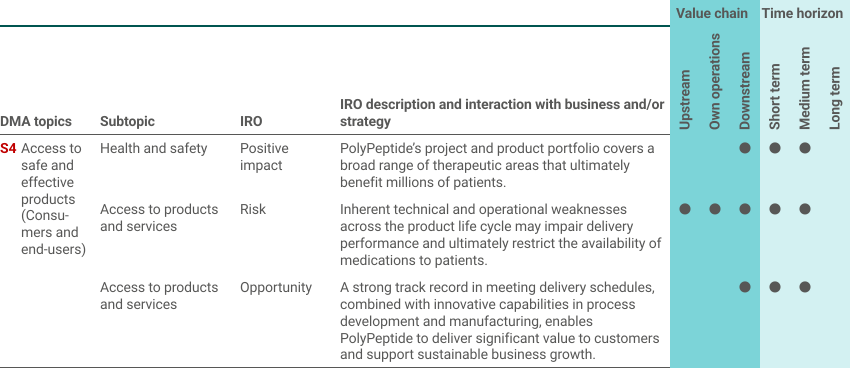
PolyPeptide’s mission is to help its customers develop products, secure regulatory approvals, and successfully launch and commercialize their products. Through its network of six GMP-certified manufacturing sites on three continents, PolyPeptide aims to consistently meet regulatory requirements and customer expectations in terms of quality, quantity, and timely delivery.
With its expertise in the development and manufacturing of peptide-based API and intermediates, PolyPeptide supports the drug innovation efforts of its customers and strives to ensure a reliable supply of material. The peptide materials involved are highly specialized and require careful handling as well as precise processes, reflecting the complexity behind modern medicines. PolyPeptide’s active custom projects and commercial projects portfolio, including generics, covers a broad range of therapeutical areas to the benefit of millions of patients. Its manufacturing and quality processes are designed to protect their safety.
The drug development and manufacturing process contains inherent technical and business risks along the entire life cycle of a product. Flawed operational processes and controls may result in a low delivery performance. Delays in agreed production and delivery schedules and/or lower-than-expected yields from manufacturing can adversely impact the availability of medication for patients.
Advanced process development capabilities, high manufacturing efficiency, and timely delivery performance enable PolyPeptide to meet customer expectations and support their drug innovation efforts. Building on a strong track record and innovative capabilities in process development and manufacturing, PolyPeptide delivers significant value to customers and enables access to safe and effective products.
Policies
The Group’s goal is to help customers develop products, secure regulatory approvals, and implement successful market launches to benefit patients around the world. PolyPeptide ensures regulatory compliance through its disciplined adherence to strict production procedures and product quality standards. The Group’s Quality Manual is the basis for all GMP activities. It defines which regulations are applicable and sets the basis for the policies and procedures to be followed for a specific product or service. An essential element is the Quality Plan, which includes quality performance metrics applicable across the Group.
Processes for engaging with customers
As a CDMO delivering APIs to our customers mainly in the pharmaceutical and biotech industries, PolyPeptide does not directly engage with or deliver to consumers and end-users. We have therefore chosen to rename the ESRS metric S4 (consumers and end-users) to “Access to safe and effective products” to better reflect our role. Compliance with policies, procedures and regulations is PolyPeptide’s main instrument to ensure delivery performance, quality of its products and availability of medication for patients. Employees engaged in the manufacturing process undergo extensive training in compliance with GMP requirements and safety regulations. The individual training includes self-study, classroom teaching, and practical on-the-job training. To maintain training levels, PolyPeptide provides regular refresher courses.
Processes to remediate negative impacts
PolyPeptide measures and tracks operational performance through a set of metrics, procedures, and internal reports. GMP nonconformities are investigated, including an impact assessment, with reviews and approvals by appropriate individuals in the quality organization. Where needed, the Group takes appropriate corrective and preventative actions. Customers are involved in the process as defined in the respective quality agreements. In addition, PolyPeptide continuously develops its internal standards and procedures to enhance Group-wide consistency and coordination. Quality is secured at every production stage following the procedures from raw material sourcing, testing, and storage through production, packaging, testing, releasing, and finally, delivery of the product to the customer.
Actions
PolyPeptide aims to be the preferred long-term partner for customers throughout the entire drug life cycle. It seeks to maintain and further develop its pipeline of active custom projects and portfolio of commercial projects, diversified across therapeutic areas. With strong process development capabilities, PolyPeptide seeks to effectively support the development of complex peptide-based APIs and to meet the growing manufacturing volume requirements. With a focus on process design, GMP, and product quality, PolyPeptide strives for high manufacturing efficiency and timely delivery performance as a driver for customer satisfaction and financial results.
In 2025, PolyPeptide underwent seven regulatory (2024: five) and 47 customer (2024: 46) GMP audits, and its audit performance has generally remained strong. Continuous improvement is facilitated by the resolution of audit comments, where appropriate actions are taken in close collaboration with customers and authorities.
Targets and metrics
PolyPeptide ensures patient safety by delivering products that meet the highest standards of quality and regulatory compliance. While PolyPeptide has not introduced quantitative targets for ensuring access to safe and effective products at this stage, the Group remains firmly committed to upholding and continuously enhancing a culture of integrity, transparency, and accountability throughout its operations. By combining advanced process development capabilities with GMP compliance and robust quality systems, PolyPeptide strives to deliver reliable, on-time performance and scalable solutions that enable customers to bring life-changing therapies to patients worldwide.