Environmental information
Climate change
This climate section provides an overview of PolyPeptide’s approach to climate change, with reference to ESRS requirements. A comprehensive assessment of climate-related risks and opportunities, including scenario analysis, is available in the section Climate disclosures in accordance with art. 964b CO and TCFD recommendations in the Appendix of this Sustainability Report.
Throughout PolyPeptide’s value chain, greenhouse gases are emitted mainly in the following steps: (i) upstream in our supply chain, mainly from the production of raw materials (such as reagents, solvents and starting material) that we use in our production facilities, (ii) as part of raw material transport to our sites as well as (iii) treatment of manufacturing process waste. The Group’s current growth is reflected in significant emissions from Scope 3 – category 2: Capital goods (30.8% of the total emissions in 2025). In our own operations, energy use in production represents an important part of emissions, which we plan to reduce with the implementation of an energy efficiency program and replacement of refrigerants with a high Global Warming Potential (GWP). In our downstream value chain, greenhouse gas emissions from the transport of APIs to our customers are not considered significant.
Managing these emissions is not only essential for regulatory compliance but also for long-term resilience and competitiveness. This commitment shapes PolyPeptide’s strategic focus on three key areas: climate change mitigation through reducing emissions, climate change adaptation to safeguard operations, and accelerating the transition to renewable energy to decarbonize PolyPeptide’s production footprint.
Climate change mitigation involves PolyPeptide’s efforts to limit GHG emissions directly and indirectly from its own operations (Scope 1 and 2), and to deploy specific action plan to limit its upstream emissions from its value chain (Scope 3). According to the Group’s carbon footprint assessment, more than 91% of its GHG emissions in 2025 originate from Scope 3.
PolyPeptide has conducted a climate scenario analysis to assess potential climate‑related risks affecting its manufacturing sites as well as its key suppliers. The results of this assessment are provided in the section Climate disclosures in accordance with art. 964b CO and TCFD recommendations. In addition, the Group’s ongoing green chemistry program is expected to play a significant role in strengthening PolyPeptide’s overall climate change adaptation by reducing environmental impacts and enhancing the resilience of its manufacturing processes.
As PolyPeptide continues to grow, its energy consumption is expected to increase accordingly. To address this challenge, the Group has implemented a dedicated program aimed at offsetting the rising cost of energy through on‑site energy generation and improved energy efficiency. This approach is projected to support PolyPeptide’s expansion while managing operational costs and reducing environmental impact.
Impacts, risks and opportunities
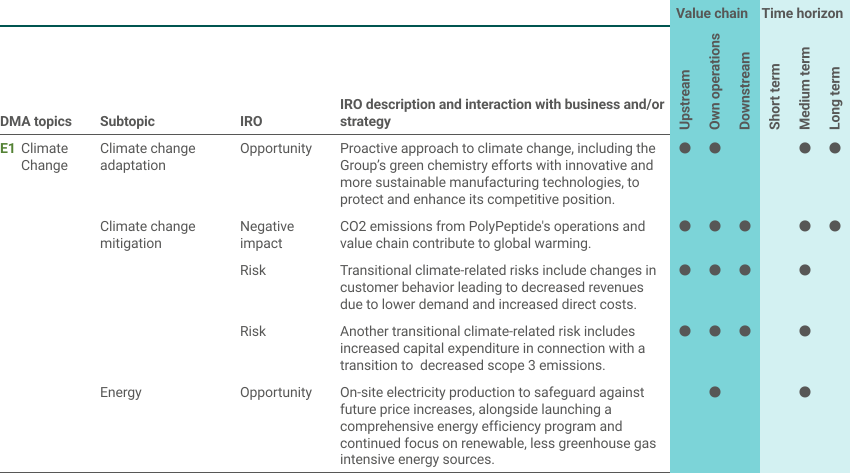
Climate-related risks refer to challenges that PolyPeptide may face due to climate change and related environmental, economic, and social impacts. These risks are affected by GHG emissions from PolyPeptide’s operations and value chain, which contribute to global warming. Transitional climate-related risks include changes in customer behavior that transition towards working with suppliers that have science-based targets, which may lead to a potential decrease in Group revenues due to lower customer demand, alongside increased direct costs (e.g., raw material supplies) as well as increased capital expenditure in connection with implementing a program to limit GHG emissions. These risks can affect PolyPeptide’s operational continuity, financial performance, and strategic positioning.
On the other hand, a proactive approach to climate change, including through the Group’s green chemistry agenda with innovative and more sustainable manufacturing technologies as well as transitioning to low-carbon energy sources, can help PolyPeptide protect and enhance its competitive position.
PolyPeptide conducted a comprehensive assessment of climate-related risks and opportunities in line with TCFD recommendations. This included scenario analyses based on the Intergovernmental Panel on Climate Change (IPCC)’s Shared Socioeconomic Pathways (SSP), evaluating physical and transition risks across its global manufacturing sites and key suppliers. The analysis highlighted potential vulnerabilities such as heat stress, water scarcity, and extreme weather events, informing PolyPeptide’s adaptation and mitigation strategies and resilience planning.
Transition plan for climate change mitigation
PolyPeptide recognizes the urgency of addressing climate change and supports the objectives of the Paris Agreement. In 2024, PolyPeptide finalized its climate strategy and transition plan, which outlines the steps the Group will take to reduce GHG emissions across its operations. This transition plan reflects the Group’s commitment to mitigating material climate-related risks and integrating sustainability into its business strategy and financial planning.
To provide transparency and credibility, PolyPeptide has set near-term GHG reduction targets validated and published by the SBTi in 2025. These targets are designed to align with a 1.5°C pathway and reinforce its long-term commitment to decarbonization. The approach includes:
- Scope 1 & 2 Emissions: Transitioning to renewable energy sources through power purchase agreements (PPAs) and on-site production, optimizing energy systems by transitioning to more energy efficient processes and equipment, replacing refrigerant with a high Global Warming Potential (GWP), electrifying the Group’s car fleet and electrifying key processes to reduce reliance on fossil fuels, resulting in 42.0% absolute reduction in Scope 1 and 2 GHG emissions by 2030 compared to our 2023 base year. The Group also commits to increasing active annual sourcing of renewable electricity from 54.0% in 2023 to 100% by 2029 and to continue active annual sourcing of 100% renewable electricity through 2030.
- Scope 3 Emissions: The Group commits to reducing Scope 3 GHG emissions from purchased goods and services, capital goods, fuel- and energy-related activities, upstream transportation and distribution and waste generated in operations by 61.1% per EUR value added by 2033 from a 2022 base year. This commitment is supported by supplier engagements to assess climate maturity and implement sustainable procurement practices. To this extent, the Group commits that 45% of its suppliers (by spend) covering purchased goods and services will have science-based targets by 2029.
PolyPeptide is currently assessing potential long‑term climate objectives in line with the Paris Agreement, including the feasibility of adopting net‑zero targets and aligning with a 1.5°C reduction pathway, and confirms that it is not excluded from the EU Paris aligned benchmarks.
For more details on the transition plan, including assumptions and methodologies to assess climate-related and transitional risks, see the Climate disclosures in accordance with art. 964 Swiss Code of Obligations and TCFD recommendations in the Appendix of this Sustainability Report.
Policies
PolyPeptide has issued site‑specific EHS policies based on a regularly updated Group‑wide EHS policy statement, Global EHS Management Plan and local environmental risk assessments. The Group‑wide EHS policy addresses key aspects such as employee health and safety and environmental stewardship across the areas energy and climate, water and industrial wastewater as well as waste and chemicals and thereby supports PolyPeptide’s approach to managing relevant impacts, risks and opportunities related to climate adaptation and mitigation. These policies are aligned with PolyPeptide’s corporate targets, including energy‑ and climate‑related targets such as the sourcing of renewable energy.
PolyPeptide maintains an environmental management system based on ISO14001:2015 standards at all manufacturing sites. In addition, the manufacturing site in Ambernath is ISO50001-certified. The management system follows a continuous improvement process and is documented at each site through environmental, safety and quality procedures, checklists, forms and other relevant documentation. Furthermore, commitments validated by SBTi and actions as stated in the transition plan form the basis for the climate policies.
Actions
PolyPeptide has implemented an integrated ESRS and carbon accounting reporting platform that has increased efficiency, transparency, traceability, and scalability in sustainability reporting while reducing manual processes and external dependencies, especially for the carbon accounting of 2024 and 2025 data.
To reach its GHG reduction targets and deliver on its transition plan, PolyPeptide has initiated a number of global and site-specific initiatives, including:
Initiative 1: To achieve the absolute Scope 1 and 2 near-term targets, PolyPeptide strives to procure electricity from 100% renewable sources at all sites by 2029. In 2025, PolyPeptide continued to expand the sourcing of renewable electricity. At the end of 2025, the headquarters in Baar and the manufacturing sites in Ambernath, Braine-l’Alleud (Braine), Malmö, San Diego, and Strasbourg were operating with 100% of renewable electricity which represents an increase of 26.6% of renewable electricity consumption for the Group compared to 2023 and 80.6% of renewable electricity on Group level. Moreover, since 2024, the manufacturing site in San Diego has been identified as a “San Diego Community Power100 Champion”. This San Diego-specific voluntary program enables businesses to transition from using electricity generated by non-renewable sources to sourcing electricity from renewable energy.
Initiative 2: Building on local initiatives started in 2023, a program to replace the Group’s car fleet with electric vehicles is being deployed at all European manufacturing sites since 2025 which will reduce GHG emissions coming from mobile combustion (Scope 1). At the end of 2025, 38.8% of the European company car fleet was electric.
Initiative 3: In 2026, PolyPeptide will start the replacement of refrigerants that contain a high Global Warming Potential (GWP). These refrigerants account for 7.4% of Scope 1 and Scope 2 emissions in 2025.
These three initiatives are crucial for reaching the 42% reduction target by 2030 versus 2023. Progress on these initiatives achieved over the past two years has resulted in a 35.8% reduction in our Scope 1 and Scope 2 emissions in 2025 compared to the 2023 base year. However, additional initiatives will be required to compensate for the impact of expected business growth. Consequently, PolyPeptide plans for energy audits across all manufacturing sites to identify and carry out further energy-saving measures.
PolyPeptide expects that the financial impact for its climate transition plan will mainly be driven by initiatives related to Scope 3 emissions reduction as highlighted in the table below with an overview of current key initiatives.
|
Description of the initiative |
Emission reduction in Scope |
Decarboni- zation Lever |
Expected GHG emission reduction |
Financial invest- ment |
Base year |
Target year |
Geo- graphy coverage |
KPI description |
KPI base year |
KPI target year |
|
1 - Sourcing 100% renewable electricity by 2029 on all sites |
2 |
Fuel Switching & Renewable Energy Use |
-43.9% |
€ |
2023 |
2029 |
All sites |
% of annual externally sourced electricity consumption from renewable sources |
54% |
100.0% |
|
2 - Electric car fleet to replace current fleet (thermic/ hybrid) |
1 |
Electri- fication |
-3.7% |
€ |
2023 |
2028 |
Belgium, Sweden and France |
% of electric car in the PolyPeptide car fleet |
7.4% |
100.0% |
|
3 - Development of an obsolescence management plan to manage refrigerants with high Global Warming Potential (GWP) |
1 |
Transitio- ning to Low-GWP Natural Refrigerants |
-4.0% |
€ |
2023 |
2030 |
All manufacturing sites |
tCO2e emissions from refrigerant losses/kg of refrigerant losses |
1.9 |
Under development |
|
4 - Conducting energy audit on all manufacturing sites to identify potential energy savings |
1 & 2 |
Energy Efficiency & Consumption Reduction |
-4.0% |
€ |
2023 |
2029 |
All manufacturing sites |
tCO2e Scope 1 + 2 emissions/ kg of final product manufactured |
5.2 |
4.9 |
|
MWh of electricity consumption/ kg of manufactured product |
16.1 |
15.5 |
||||||||
|
5 - Recycling of solvent and use of recycled solvent for GMP activities |
3 |
Product/ Process Redesign & Substitution |
cat. 1 : +++ cat. 2: 0 cat. 4: ++ cat. 5: +++ |
€€ |
2022 |
2033 |
Belgium, US |
% of recycled solvent used for GMP activities for the reporting year |
3.6% |
Under development |
|
6 - Segregation of solvent waste and associated treatment |
3 |
Product/ Process Redesign & Substitution |
cat. 1 : 0 cat. 2: 0 cat. 4: 0 cat. 5: ++ |
€€ |
2022 |
2033 |
Sweden, France |
tCO2e from cat. 5/ t of solvent waste generated during operation for the reporting year |
0.8 |
Under development |
|
7 - Solvent reduction with the implementation of new technology |
3 |
Product/ Process Redesign & Substitution |
cat. 1 : ++ cat. 2: 0 cat. 4: ++ cat. 5: ++ |
€ |
2022 |
2033 |
All manufacturing sites |
t of solvent/ kg of final product manufactured for the reporting year |
3.4% |
Under development |
|
8 - Science-based target for 45% of suppliers by spend |
3 |
Supply Chain Decarboni- zation |
cat. 1 : +++ cat. 2: 0 cat. 4: + cat. 5: 0 |
€ |
2022 |
2030 |
All manufacturing sites |
% of raw material spend for suppliers with science-based targets for the reporting year |
8% |
45% |
|
9 - Modular approach for new buildings |
3 |
Product/ Process Redesign & Substitution |
cat. 1 : + cat. 2: ++ cat. 4: 0 cat. 5: 0 |
€€€ |
2022 |
2033 |
All manufacturing sites |
N/A |
N/A |
N/A |
+++ > -10% GHG emission reduction within the category;
++ impact > between -5 and -10% GHG emission reduction within the category;
+ impact < -5% GHG emission reduction within the category;
0 - no identified impact on PolyPeptide’s GHG emissions.
Financial investment: € < 1MEUR ; €€ 1–5 MEUR , €€€ > 5MEUR.
Recognizing that more than 90% of its emissions fall under Scope 3, PolyPeptide plans to integrate environmental sustainability criteria into supplier contracts where commercially reasonable in the coming two years.
Currently, PolyPeptide is focused on the reduction of emissions from solvents, which represent a key raw material in our operations. This initiative aligns with two main climate-related transition risks: changing customer behavior and the transition to increased recycled content. We anticipate a substantial decrease in these emissions through solvent recycling initiatives (Scope 3 – categories 1 and 5) and by urging 45% of our main suppliers (by spend) to set science-based GHG emission reduction goals.
PolyPeptide’s capital expenditure includes focus on technologies that advance green chemistry and solvent recycling. These investments, which will not have a significant long-term impact on Scope 3 category 2, aim to reduce the environmental impact of manufacturing processes by promoting sustainable practices and circularity. These investments will enable medium-term CO2 emission reduction in categories 1, 4 and 5. Additionally, PolyPeptide is allocating resources towards the development and adoption of alternative energy sources, reinforcing its commitment to reducing GHG emissions and improving energy efficiency.
PolyPeptide also strives to leverage the potential for modularity. Prefabrication helps limit GHG emissions thanks to the industrial optimization of construction processes, reduced waste generation, and improved logistics efficiency compared to traditional on-site building methods. In addition, modularity shortens project timelines, enabling facilities to become operational more quickly.
Collectively, these investments demonstrate PolyPeptide’s proactive approach to embedding sustainability into its operations, ensuring that its capital is deployed to foster both innovation and environmental responsibility1.
At this time, PolyPeptide has not set an internal carbon price, as this has not been identified as a priority within the current climate strategy in accordance with the risk and opportunity assessment. The primary focus remains the implementation of the established transition plan, which allocates resources to key initiatives that drive tangible emissions reductions. The Group’s existing asset base does not significantly limit its ability to reduce emissions in line with climate targets at this stage.
In response to the growing demand from its customers for access to product-specific CO2 data, toward the end of 2025 PolyPeptide launched a project to enable the calculation and communication of product carbon footprints to its customers.
Targets and metrics
As outlined in the section Transition plan for climate change mitigation, the Group has set science-based targets for Scopes 1, 2 and 3 following the SBTi near-term target methodology.
Scope 1 and 2 GHG emission reduction near-term absolute target
|
|
|
|
|
|
Target ID |
|||
|
Overall number of active GHG emissions targets: |
2 |
|
|
|
Target number: |
1/2 |
|
|
|
Target type: |
Absolute near-term target |
|
|
|
Date the target was approved by SBTi: |
August 2025 |
Date the target was last revised: |
does not apply |
|
|
|
|
|
|
Target information |
|||
|
Scope(s) covered |
Scopes 1 & 2 (market-based) |
|
|
|
Percentage of in-scope emissions covered by the target |
100% |
|
|
|
Base year: |
2023 |
Base year emissions, t CO2e |
10,333 |
|
Target year: |
2030 |
Target year projected emissions, t CO2e |
5,993 |
|
|
|
|
|
|
Targeted reduction from base year (%): |
42% |
|
|
|
Targeted reduction achieved from current year (%): |
36% |
Current emissions, t CO2e (2025) |
6,633 |
|
Target methodology |
|||
|
Verified by an independent party |
Yes, BDO |
|
|
|
Source that describes transition plan outlining how this target will be met |
Climate Report Metrics and Targets |
|
|
|
Indicate the % of the target to be achieved through offsets |
0% |
|
|
Scope 3 GHG emission reduction near-term intensity target
|
|
|
|
|
|
Target ID |
|||
|
Target number: |
2/2 |
|
|
|
Target type: |
Intensity near-term target |
|
|
|
Date the target was approved by SBTi: |
August 2025 |
Date the target was last revised: |
does not apply |
|
|
|
|
|
|
Target information |
|||
|
Scope(s) covered |
Scope 3 |
|
|
|
Percentage of in-scope emissions covered by the target |
95% |
Category 1: purchased goods and services, Category 2: capital goods, Category 3: fuel- and energy-related activities, Category 4: upstream transportation and distribution, Category 5: waste generated in operations |
|
|
Base year: |
2022 |
Base year emissions, t CO2e/kEUR value added |
6.1 |
|
Target year: |
2033 |
Target year projected emissions, t CO2e/kEUR value added |
2.4 |
|
Targeted reduction from base year (%): |
61.07% |
|
|
|
Targeted reduction achieved from current year (%): |
+31% |
Current emissions, t CO2e/ kEUR value added (2025) |
8,0 |
|
|
|
|
|
|
Target methodology |
|||
|
Verified by an independent party |
Yes, BDO |
|
|
|
Source that describes the methodology used to calculate Scope 3 emissions covered by the target |
Climate Report Metrics and Targets |
|
|
|
Source that describes transition plan outlining how this target will be met |
Climate Report Metrics and Targets |
|
|
|
Indicate the % of the target to be achieved through offsets |
0% |
|
|
The charts below illustrate the reduction targets approved by the Science-Based Target initiative in 2025 over time
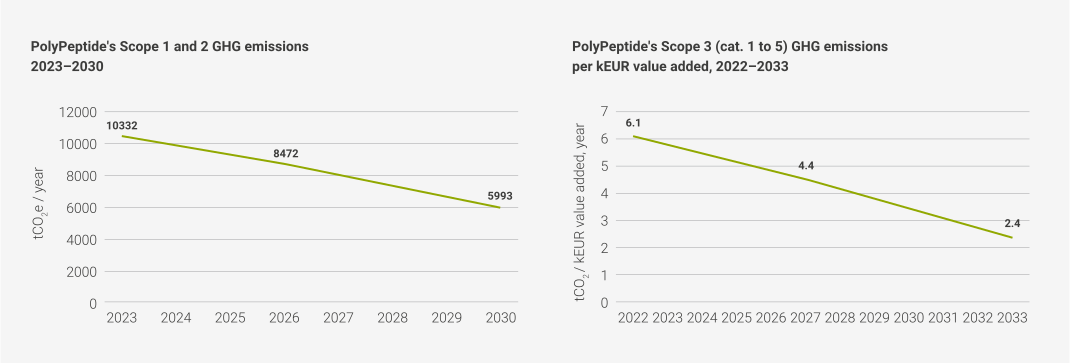
Apart from the Scope 1 and 2 absolute near-term and Scope 3 intensity near-term targets, the Group has set two engagement targets: (i) for renewable electricity sourcing: PolyPeptide aims to increase active annual sourcing of renewable electricity from 54% in 2023 to 100% by 2029 and to continue active annual sourcing of 100% renewable electricity through 2030; and (ii) for Scope 3: PolyPeptide requires that suppliers representing 45% of purchased goods and services by spend have science-based targets by 2030 (base year 2022).
|
|
|
|
|
|
Energy consumption and mix (MWh) |
2025 |
2024 |
2023 |
|
Total energy consumption |
60,329 |
59,177 |
58,318 |
|
fuel (excluding feedstock) |
21,309 |
21,099 |
22,164 |
|
purchased electricity |
35.308 |
34,481 |
32,272 |
|
purchased heat |
3,337 |
3,232 |
3,470 |
|
self-generated non-fuel renewable energy |
375 |
365 |
413 |
|
Renewable sources |
28,206 |
25,135 |
17,880 |
|
Part of renewable energy (%) |
47% |
42% |
31% |
Performance KPIs
|
-35.8% |
PolyPeptide’s absolute Scope 1 and Scope 2 GHG emissions vs 2023 |
|
-47% |
PolyPeptide’s Scope 1 and Scope 2 2025 GHG emissions relative to total revenues vs 2023 |
|
-9% |
PolyPeptide’s absolute Scope 3 GHG emissions (cat. 1 to 5) vs 2022 |
|
-24% |
MWh of electricity consumption/ kg of manufactured product vs 2023 |
|
80.6% |
of sourced electricity from renewable sources 2025 |
|
201.2 |
Total GHG emissions 2025 (market-based) per net revenue (tCO2e/MEUR) |
|
216.2 |
Total GHG emissions 2025 (location-based) per net revenue (tCO2e/MEUR) |
|
Group greenhouse gas emissions (tCO2e) |
2025 |
2024 |
2023 |
2022 |
|
Total Scope 1 |
5,139 |
7,283 |
5,834 |
5,766 |
|
Stationary combustion |
4,125 |
4,407 |
4,770 |
4,168 |
|
Process emissions |
130 |
171 |
223 |
476 |
|
Mobile emissions |
394 |
483 |
490 |
352 |
|
Refrigerants |
490 |
2,222 |
351 |
770 |
|
Percentage of Scope 1 GHG emissions from regulated emission trading schemes (%) |
0 |
0 |
0 |
0 |
|
Total Scope 2 (location-based) |
7,330 |
7,412 |
9,395 |
8,819 |
|
Total Scope 2 (market-based) |
1,494 |
3,557 |
4,498 |
4,105 |
|
Purchased electricity (market-based) |
1,009 |
3,086 |
4,408 |
4,021 |
|
Purchased hot water |
485 |
470 |
90 |
84 |
|
Total Scope 3 |
71,716 |
64,611 |
68,404 |
80,639 |
|
Category 1: Purchased goods and services |
31,327 |
26,433 |
20,877 |
19,655 |
|
Category 2: Capital goods |
24,143 |
23,751 |
31,687 |
45,241 |
|
Category 3: Fuel- and energy-related activities (not included in Scope 1 or Scope 2) |
3,050 |
3,132 |
1,740 |
1,179 * |
|
Category 4: Upstream transportation and distribution |
956 |
845 |
3,286 |
3,002 * |
|
Category 5: Waste generated in operations |
9,888 |
8,122 |
8,480 * |
7,487 |
|
Category 6: Business travel |
278 |
315 |
274 |
471 * |
|
Category 7: Employee commuting |
2,035 |
1,987 |
1,934 |
3,512 * |
|
Category 9: Downstream transportation and distribution |
40 |
26 |
126 |
92 |
|
Total (market-based) |
78,349 |
75,451 |
78,736 |
90,510 |
|
Total (location-based) |
84,185 |
79,304 |
83,635 |
95,225 |
Overview of GHG emissions 2025
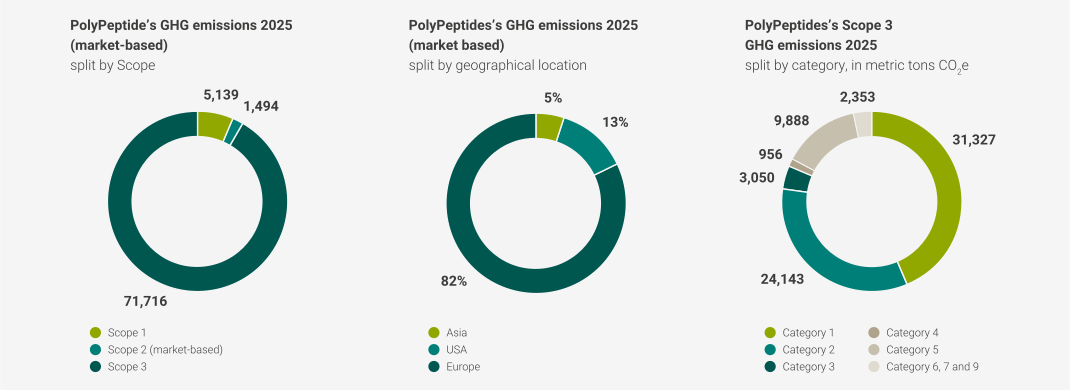
By the end of 2025, raw material suppliers representing 14% of spend already had SBTi‑approved targets. In addition, suppliers accounting for 4% of spend had formally submitted their commitment to SBTi.
Taking into consideration the increased manufacturing volumes during the reporting period, the electricity consumption per kilogram of manufactured product decreased by 24% compared to 2023, mainly attributable to energy efficiency measures applied by the Group.
In 2025, PolyPeptide’s Scope 1 and Scope 2 emissions decreased by 35.8% compared to 2023 levels. This reduction was primarily driven by the transition to renewable electricity across five of our production sites, as well as lower CO2 emissions from stationary combustion and process-related activities. This marks significant progress for the Group, which aims to reduce emissions by 42% by 2030.
During the same period, Scope 3 emissions for Categories 1 to 5 fell by 9%. However, relative to its GEVA target (Greenhouse Gas Emissions per Unit of Value Added), overall Scope 3 (cat. 1 to 5) emissions increased by 31%. This rise was mainly due to a lower value-added level than what had been anticipated on the pathway toward 2033.
Accounting policies
Energy consumption and mix
Electricity volume data is sourced from meter readings and supplier invoices. Electricity is classified as renewable when the origin of the purchased energy is explicitly specified in contractual agreements with energy providers. This includes renewable power purchase agreements and market instruments such as Guarantees of Origin from renewable sources. If such documentation is not provided, the emission factor provided by the electricity supplier is used.
GHG emissions
In 2025, PolyPeptide conducted its fourth global carbon footprint assessment in accordance with the GHG Protocol. The Group conducted the assessment according to the following parameters:
- Consolidation approach and organizational boundary: Financial. In our case, Financial and Operational control boundaries are fully aligned, apply also for SBTi targets and have been reflected during target setting.
- Standards applied: The Greenhouse Gas Protocol: A Corporate Accounting and Reporting Standard (Revised Edition), The Greenhouse Gas Protocol: Scope 2 Guidance, The Greenhouse gas Protocol: Corporate Value Chain (Scope 3) Standard
- Reporting period: calendar years 2024 and 2025.
- Where applicable, specific emission factors provided by public and licensed databases such as EcoInvent are applied in the calculation of CO2 emissions. Where available, supplier-specific emission factors are used (representing less than 1% of Scope 3 emissions).
GHG intensity
GHG intensity based on net revenue has been calculated as total gross Scope 1, Scope 2 location-based/ market-based, and gross Scope 3 emissions divided by total reported net revenue in MEUR as disclosed in the Financial Report 2025.
Scope 1 emissions are direct GHG emissions that occur from sources owned or controlled by the Group, such as emissions from mobile fleet combustion, stationary combustion, process emissions from solvents and fugitive emissions from refrigerant losses. Activity data is collected at site level and converted into CO2 equivalents using internationally recognized emission factors. Emission factors are reviewed periodically to reflect the latest scientific and regulatory guidance.
Biogenic emissions PolyPeptide calculated biogenic CO2 emissions for Scope 1 and 2 as part of the SBTi validation. These emissions relate to the use of fuels with blended biocomponents purchased at public fueling stations and account for less than 1% of Scope 1 emissions of the base year.
Scope 2 emissions account for GHG emissions from the generation of purchased electricity, steam, heat or cooling consumed by the Group. Scope 2 emissions physically occur at the facility where electricity, steam, heat, or cooling is generated. Scope 2 GHG emissions are calculated according to two methods: location based (reflects the average emissions intensity of grids on which energy consumption occurs, using mostly grid-average emission factor data), and market-based (reflects emissions from electricity that companies have purposefully chosen, derives emission factors from contractual instruments).
Scope 3 emissions involve GHG emissions in the value chain and are a consequence of the activities of PolyPeptide but occur from sources not owned or controlled by the Group. Examples of Scope 3 activities include extraction and production of purchased materials; transportation of purchased goods; employee commuting; treatment of waste generated in own operations; and transportation of sold products. Applicable Scope 3 categories and their calculation method are outlined in the table below:
Scope 3 calculation methods applied in PolyPeptide’s corporate carbon footprint
|
Scope 3 category |
Calculation method |
|
|
Category 1: Purchased goods and services |
• |
Supplier-specific |
|
• |
Average data |
|
|
• |
Spend-based |
|
|
Category 2: Capital goods |
• |
Spend-based |
|
Category 3: Fuel- and energy-related activities (not included in Scope 1 or Scope 2) |
• |
Average data |
|
Category 4: Upstream transportation and distribution |
• |
Distance-based |
|
Category 5: Waste generated in operations |
• |
Waste-type-specific |
|
Category 6: Business travel |
• |
Supplier-specific |
|
• |
Distance-based |
|
|
Category 7: Employee commuting |
• |
Average data |
|
• |
Distance-based |
|
|
Category 8: Upstream leased assets |
• |
Does not apply: Any consumption and respective emissions from upstream leased assets have already been included in Scope 1 and 2 emissions (organizational boundary approach). |
|
Category 9: Downstream transportation and distribution |
• |
Distance-based |
|
Category 10: Processing of sold products |
• |
Does not apply: Calculating Scope 3, Category 10 GHG emissions for APIs is highly complex due to limited downstream data and fragmented supply chains, making accurate quantification challenging. Variability in external processing and proprietary operations further compounds this difficulty. |
|
Category 11: Use of purchased goods |
• |
Does not apply: PolyPeptide does not produce APIs used in inhalers that may require refrigerants and cause use-phase emissions. |
|
Category 12: End-of-life treatment of sold products |
• |
Does not apply: Emissions in this category would only cover end-of-life packaging treatment, which is immaterial to PolyPeptide’s carbon footprint and therefore not calculated. |
|
Category 13: Downstream leased assets |
• |
Does not apply: This category does not apply to PolyPeptide. |
|
Category 14: Franchises |
• |
Does not apply: This category does not apply to PolyPeptide. |
|
Category 15: Investment |
• |
Does not apply: This category does not apply to PolyPeptide. |
Pollution
Environmental management is a strategic priority for PolyPeptide as it prevents pollution, protects ecosystems and biodiversity, assures regulatory compliance, and strengthens the Group’s market position as a responsible API (e.g., chemical) manufacturer. Preventing pollution comprises the sub-topics Pollution of air, pollution of water, pollution of soils, as well as the use of Substances of concern (SOCs) and Substances of very high concern (SVHC).
Pollution of air (excluding GHG emissions) may occur within PolyPeptide’s own operations from the evaporation of handled chemicals during manufacturing processes or in case of an incident such as fire. Pollution of water refers to the contamination with hazardous substances used for production or cleaning activities. Soil and groundwater pollution could occur in the event of an incident such as leaks of stored chemicals at manufacturing sites.
PolyPeptide’s manufacturing processes involve SOCs and SVHCs that can have an impact on health and the environment. Examples include methanol and piperidine (SOCs) and dimethylformamide (SVHC).
Impacts, risks and opportunities
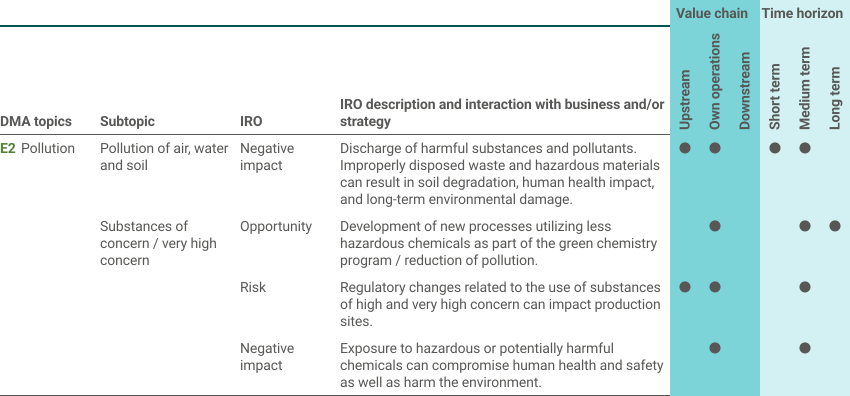
As part of its DMA, PolyPeptide screened its own operations and relevant upstream value chain activities to identify actual and potential pollution related impacts, risks and opportunities. The screening followed a structured approach to locate, evaluate and assess relevant IROs, based on site level EHS risk assessments, regulatory requirements, incident data and internal expertise, with results validated through internal expert and management review, which then informed the material topics disclosed under ESRS E2.
Based on this assessment, and given their critical role in PolyPeptide’s innovation, development and manufacturing processes, SOCs, such as methanol, piperidine, and SVHCs, such as dimethylformamide (DMF), were assessed as highly material. These chemicals pose risks to human health and the environment if not managed properly. Exposure to these substances can compromise employee safety and potentially affect surrounding communities. The CDMO industry, including PolyPeptide, faces evolving challenges related to the use of SOCs and SVHCs, not only in terms of adapting to potential regulatory changes, but also in our responsibility to avoid environmental impact and safeguard natural ecosystems. When managing these substances, activities are carried out according to internal risk assessments. We follow established safety and environmental practices designed to support responsible handling and compliance with applicable guidelines and regulations across our operations.
These challenges may affect market dynamics and production processes, requiring us to continuously improve our practices to ensure regulatory compliance and protect the environment. At the same time, we focus our efforts on sustainability areas where we believe we can exert the greatest influence. In this context, PolyPeptide sees the development of new processes utilizing less hazardous chemicals and our green chemistry agenda aimed at advancing more sustainable production processes and solutions as essential to driving innovation.
Policies
PolyPeptide’s EHS Group Policy Statement provides the overall framework for our commitments and actions aimed at employee health and safety as well as environmental stewardship. In furtherance of this statement, the Global EHS Management Plan sets out the health, safety and environmental requirements that apply to all activities and employees at PolyPeptide. This Global EHS Management Plan provides guidance for local EHS programs and other local procedures, including those related to handling hazardous materials throughout the entire production process within our own operations and addressing all material topics related to pollution. Moreover, all manufacturing sites maintain local business continuity, emergency and response plans, defining actions to limit impacts on people, the environment and business continuity.
In 2025 PolyPeptide committed to the Responsible Care initiative, making a public pledge to continuously improve its health, safety and environmental performance, as well as the responsible management of chemicals throughout their lifecycle.
Actions
Pollution of air, water and soil
PolyPeptide is committed to reducing air pollution across its manufacturing sites. To limit harmful emissions, we use advanced systems like Regenerative Thermal Oxidizers (RTOs)1 at our Malmö and Braine facilities. These systems help respect emission limits for volatile organic compounds (VOCs) and other pollutants from exhaust air. At the Braine site, we also use activated carbon filters on ventilation systems to prevent laboratory fumes from entering the atmosphere. We are currently mapping VOC emissions at our European sites (i.e., Malmö, Braine, and Strasbourg) to comply with European regulations and apply best practices for minimizing environmental impact.
In addition, we have started phasing out the use of dichloromethane (DCM) at all sites, a substance that contributes to air pollution and will be classified as carcinogenic throughout Europe during 20262.
PolyPeptide takes robust measures to prevent water pollution. At our sites in Braine and Ambernath, industrial wastewater is treated in wastewater treatment plants, where pollutants are broken down before discharge. We monitor water quality to ensure safety and compliance. At our other sites (Malmö, Strasbourg, San Diego, and Torrance), industrial wastewater is collected as a waste and sent to certified treatment facilities.
To prevent soil contamination, all chemicals at PolyPeptide sites are stored in secure areas with secondary containment, and safety measures are implemented to avoid leaks or reactions. No thresholds regarding emission of pollutants warranting disclosure according to disclosure requirement ESRS E2-4 were exceeded during 2025.
Substances of Concern and Substances of Very High Concern
One of the key challenges PolyPeptide faces is the use of trifluoroacetic acid (TFA), a chemical classified as SOC, essential to certain production processes but notable for its persistence in the environment, as it does not naturally break down. This characteristic raises significant concerns regarding long-term environmental accumulation and potential ecological harm. In response, our innovation efforts are focused on developing new production methods to reduce and, where technically feasible and commercially acceptable, substitute selected SOCs/SVHCs. We are committed to consistently offering these improved, more sustainable solutions to our customers during product development, thereby reducing our environmental impact and supporting broader sustainability goals.
In pursuit of efficient use of DMF, classified as SVHC, the Group continues to deploy its patented in-process washing concept by percolation3, which was developed by the Group’s Global Innovation and Technology team.
Volatile Organic Compounds (VOCs): Organic chemicals that easily evaporate at room temperature and can contribute to air pollution and health risks.
PolyPeptide submitted this concept to the European Responsible Care (RC) Awards 2025. The concept was judged as an exemplary model in the field of circular economy, where the approach to reducing solvent consumption was particularly well received. Therefore, RC have proposed to share the project as a best practice in the European Chemical Industry Council (Cefic) RC self-assessment webtool – an online platform that helps chemical companies evaluate and improve their sustainability, safety, and environmental practices by benchmarking against industry standards and sharing best practices.
The Group also continues its comprehensive efforts to recycle or downcycle hazardous solvents and reagents used both in its up- and downstream manufacturing processes, see also section Resource use and circular economy.
Targets and metrics
In line with the actions highlighted above, voluntary pollution targets include:
- Apply green chemistry principles to reduce the use of SOCs and SVHCs.
- Monitor key pollutants such as DCM, SOCs and SVHCs annually, and minimize VOC emissions through air filtration and emission control technologies.
- Reduce the quantity of solvents used in production through the implementation of innovative technologies.
- Apply specific treatment to 100% of final products at end-of-life to avoid environmental pollution when destruction is required by customers.
In addition, to replace hazardous solvents or reagents with greener alternatives, PolyPeptide has gradually introduced the option of using greener solvents in new process development quotes. These alternatives, referred to as greener solvents, are selected for their lower environmental impact, reduced toxicity, and improved safety profile compared to conventional solvents (SOCs and SVHCs). In 2024, this option was included in 10.8% of all development quotes, whereas in 2025 it was included in 26.95% of the development quotes. The target for 2026 is set at 40%.
The solvent DMF is by far the most significant SOC and SVHC in PolyPeptide’s manufacturing process. In 2025, DMF represented more than 87% of all SOCs used, and over 99% of the total amount of SVHCs.
Any residuals of SOCs or SVHCs are managed and leave the sites primarily via controlled waste treatment/disposal channels in accordance with applicable permits and regulations.
SOCs and SVHCs used during production and classified according to hazard class
|
|
|
|
|
|
Substances of concern (tonnes) |
2025 |
2024 |
2023 |
|
Health hazard |
6,714 |
4,527 |
4,087 |
|
Environmental hazard |
69 |
65 |
54 |
|
Health and Environmental hazard |
0.5 |
0.9 |
0.6 |
|
Total |
6,783 |
4,593 |
4,142 |
|
Substances of very high concern (tonnes) |
2025 |
2024 |
2023 |
|
Health hazard |
5,965 |
3,925 |
3,367 |
|
Environmental hazard |
0 |
0 |
0 |
|
Health and Environmental hazard |
0.5 |
0.9 |
0.6 |
|
Total |
5,966 |
3,926 |
3,368 |
Accounting policies
Substances of concern and substances of very high concern
SOCs and SVHCs used in the manufacturing processes at PolyPeptide’s manufacturing sites are included in this Sustainability Report. Among the SOCs, the SVHCs were identified based on the ‘Candidate List of substances of very high concern for Authorization’, which identifies chemicals that may be added to Annex XIV of REACH (the authorization list). The weight of substances is calculated according to substance-specific conversion factors where available, otherwise we assume a density of one kilogram per liter.
The underlying substances are highlighted in three main hazardous classes:
Health hazard, including substances of at least one of the following characteristics:
- Carcinogenicity categories 1 and 2
- Germ cell mutagenicity categories 1 and 2
- Reproductive toxicity categories 1 and 2
- Endocrine disruption for human health
- Persistent, Mobile and Toxic or Very Persistent, Very Mobile properties
- Persistent, Bioaccumulative and Toxic or Very Persistent, Very Bioaccumulative properties
- Respiratory sensitization category 1
- Skin sensitization category 1
- Specific target organ toxicity, repeated exposure categories 1 and 2
- Specific target organ toxicity, single exposure categories 1 and 2
Environmental hazard, including substances of at least one of the following characteristics:
- Endocrine disruption for the environment
- Chronic hazard to the aquatic environment categories 1 to 4
- Hazardous to the ozone layer
Health and environmental hazard, for substances associated with hazards from both hazard classes above.
Resource use and circular economy
Resource use and circular economy encompass the two dimensions of resource inflows and waste. PolyPeptide’s main resource inflows are starting materials, solvents, reagents, purification resins, SPPS resins and linkers. Waste generated in the Group’s operations includes hazardous and non-hazardous waste.
Impacts, risks and opportunities
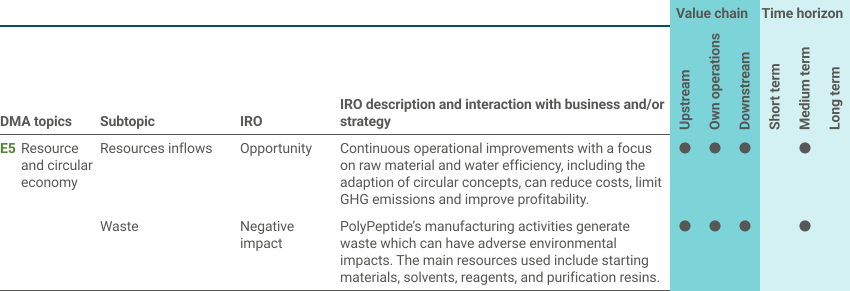
Peptide synthesis requires the use of significant quantities of raw materials, particularly solvents. With the Group’s growth and the scaling up of manufacturing processes, solvent consumption has increased. This increased activity and the large volumes of solvents also led to a higher generation of waste, including hazardous waste.
Used solvents are PolyPeptide’s main type of waste. As part of its green chemistry agenda, the Group has initiated measures to downcycle and recycle solvents, helping to use natural resources more efficiently. Operational excellence, including innovative waste management practices and continuous improvements focused on resource efficiency and the adoption of circular concepts, helps mitigate the increasing waste generation from business growth while reducing costs, limiting GHG emissions, and improving profitability.
Water is also an important resource, serving as a key solvent throughout various production stages, including purification activities, cleaning processes, and certain utility operations. Although water is not considered material under the E3 (Water and marine resources) scope parameters, the resource-use analysis identified it as a significant solvent and a component also of the waste stream.
Policies
PolyPeptide is committed to using resources responsibly and minimizing waste throughout its operations. In furtherance of the PolyPeptide EHS Group Policy Statement that provides the overall framework for our commitments and actions aimed at employee health and safety as well as environmental stewardship, the Global EHS Management Plan sets out the health, safety and environmental requirements that apply to all manufacturing processes. It provides guidance for local EHS programs and procedures, designed to protect our workforce, minimize risks, and promote a safe and healthy working environment.
In alignment with our EHS Group Policy Statement and Global EHS Management Plan, we have established local EHS policies at each production site and the innovation center in Strasbourg to ensure proper handling of residual materials and waste.
These policies require that all resource-related waste is correctly classified, segregated, and managed in compliance with environmental regulations. Waste is transported and disposed of only through certified companies using approved methods to protect human health and the environment. The scope of these policies includes all employees involved in managing production and laboratory waste within our operations.
Site Directors are responsible for implementing these policies and ensuring that resource use is optimized, waste streams are minimized, and circular practices are promoted wherever possible. Through these measures, PolyPeptide aims to reduce environmental impact and support sustainable resource management across all sites.
Actions
PolyPeptide is committed to reducing the environmental impact of its operations by improving how solvents are managed across all sites. Solvents are essential in peptide manufacturing, but their use can generate significant waste. To address this, we have launched several programs focused on down-cycling solvent waste and, wherever feasible, recovering solvents for reuse in production processes.
Our long-term goal is to expand solvent recovery capabilities across all sites and integrate them into standard operating procedures, reinforcing PolyPeptide’s commitment to resource efficiency and environmental stewardship. Recovering solvents offers multiple benefits: it reduces the demand for fresh solvents, lowers waste volumes, and minimizes the environmental footprint of our operations. These initiatives involve evaluating existing processes, upgrading equipment where necessary, and implementing best practices for solvent handling and purification. In some cases, recovered solvents can be reintegrated into non-critical steps of production, creating a more circular approach to resource use.
In 2025, PolyPeptide achieved a significant improvement at its Malmö site with the commissioning of a new tank farm, designed to improve efficiency, safety, and resource management. The tank farm centralizes solvent inflows, distribution and waste collection, replacing multiple truck transfers with automated pipeline systems. This innovation reduces manual handling, minimizes on-site traffic, and enables faster, safer operations. Waste streams can now be consolidated for optimized treatment, and solvent handling is streamlined to support future recovery and reuse initiatives. Benefits of such an investment have already been proven by the existing tank farm at the Braine site, which has been recycling solvents for over 20 years. By increasing capacity and reducing resource losses, the tank farm in Malmö represents a key step toward circularity and sustainable growth, aligned with PolyPeptide’s long-term strategy for responsible resource use.
In addition to solvent down-cycling recovery, our Global Innovation and Technology team is working on ways to use solvents more efficiently. One key approach is introducing high-capacity resins in our manufacturing process1. These resins will allow us to produce more in the same reactor space, which means we need less solvent overall. This improvement will help reduce waste and lower our environmental impact.
Water is essential for our processes and represents a significant part of our waste stream. Using water efficiently and addressing the circularity of wastewater is therefore a priority for PolyPeptide. To improve efficiency, we focus on reducing water use and reusing it wherever possible. In 2025, PolyPeptide launched a program to map all water consumption points across our sites. This detailed analysis will help us identify the areas with the highest usage and uncover opportunities for reduction. Improvements may come from replacing older equipment with modern, water-saving technologies or reclaiming wastewater for non-critical applications. For example, at our Ambernath site, water treated in the wastewater plant is reused for cooling.
Targets and metrics
In line with the actions highlighted above, circularity targets include:
- Treat 100% of industrial wastewater discharges to meet local discharge standards
- Complete mapping of water consumption across 100% of manufacturing sites by 2027, supporting the initiation of efficiency improvements in 2028.
Initiatives related to resource inflow, including solvent use, are described in the section Climate change.
Although the zero‑landfill goal is a voluntary target, and even if landfilling accounts for less than 0.5% of our waste disposal, we are actively working on identifying new treatment methods for the remaining concerned waste. Despite an increase in raw-material inflow to net revenue ratio, the share of non-recycled waste has continuously decreased over the past three years, reflecting the initiatives taken by PolyPeptide to reduce its environmental footprint.
Overall water consumption decreased in 2025 compared to 2024, with trends over time affected by product mix. As mentioned, PolyPeptide is working towards better water efficiency based on the mapping of water consumption started in 2025.
|
Raw material inflow |
2025 |
2024 |
2023 |
|
Raw material inflow (kg) |
12,993,386 |
10,896,917 |
8,689,037 |
|
Net revenue (kEUR) |
389,327 |
336,792 |
320,372 |
|
Raw material inflow per net revenue (kg/kEUR) |
33.4 |
32.4 |
27.1 |
|
Recovered and disposed waste in tonnes |
2025 |
2024 |
2023 |
|
Total amount of waste generated |
18,361 |
15,376 |
14,148 |
|
Total amount of waste diverted from disposal |
18,101 |
14,949 |
13,515 |
|
Preparation for reuse |
0 |
0 |
0 |
|
- Hazardous waste |
0 |
0 |
0 |
|
- Non-hazardous waste |
0 |
0 |
0 |
|
Recycling |
7,056 |
5,206 |
4,106 |
|
- Hazardous waste |
7,017 |
5,206 |
4,106 |
|
- Non-hazardous waste |
39 |
0 |
0 |
|
Other recovery |
11,045 |
9,743 |
9,409 |
|
- Hazardous waste |
10,752 |
9,493 |
9,117 |
|
- Non-hazardous waste |
293 |
250 |
292 |
|
Total amount of waste directed to disposal |
260 |
427 |
633 |
|
Incineration |
169 |
269 |
434 |
|
- Hazardous waste |
169 |
269 |
433 |
|
- Non-hazardous waste |
0 |
0 |
1 |
|
Authorized landfill |
65 |
56 |
58 |
|
- Hazardous waste |
8 |
1 |
3 |
|
- Non-hazardous waste |
57 |
55 |
55 |
|
Other disposal |
25 |
102 |
141 |
|
- Hazardous waste |
25 |
102 |
141 |
|
- Non-hazardous waste |
0 |
0 |
0 |
|
Percentage of non-recycled waste in percent |
1.4 |
2.8 |
4.5 |
|
|
|
|
|
|
Water consumption |
2025 |
2024 |
2023 |
|
Fresh water consumption (m 3 ) |
174,985 |
177,297 |
137,597 |
|
Finished Products (kg) |
2,862 |
1,823 |
2,000 |
|
Water consumption (m 3 /kg) |
61 |
97 |
69 |
Accounting policies
Resource inflows
Key material inflow includes starting materials, solvents, reagents, purification resins, SPPS resins and linkers. The total weight shown reflects 100% technical materials. None of these materials are or contain critical or strategic raw materials as identified in Annex I and Annex II of the Critical Raw Materials Act (Regulation (EU) 2024/1252).
The percentage of secondary reused or recycled components is near zero and therefore not indicated separately.
Data reported is calculated based on physical quantities of goods sourced and the methodologies for carbon accounting data Scope 3, category 1: Purchased goods and services.
Resource outflows
Solvent recycling: The process of purifying used solvents so they can be reused for the same or similar purpose without altering their chemical structure.
Solvent recovery: The process of extracting solvents from waste streams to minimize loss and environmental impact. Recovered solvents may be reused after further treatment or disposed of safely.
Progress on solvent reduction initiatives is monitored by the total raw material inflow relative to net revenues (indicative for manufactured volumes). The implementation of solvent recovery is monitored by the total volume of recovered solvents (in tonnes) vs. the total amount of generated waste.
We track progress on water efficiency by monitoring the volume of fresh water used per kilogram of finished product (m³/kg).
Waste
Indicators for waste management include the weight of hazardous (>97% of the total waste) and non-hazardous waste. Hazardous waste mainly consists of chemical waste (primarily solvents) generated during manufacturing activities but also includes lubricating oils and refrigerants. Non-hazardous waste mainly consists of paper and cardboard, plastic, glass, metal, organic waste (food and drink waste) and household residual waste. Waste subcategories are shown between hazardous and non-hazardous waste, as defined in the EU’s Waste Framework Directive. We have not identified any radioactive waste in our operations.
Only waste generated at manufacturing sites and the innovation center in Strasbourg is considered in the metrics, with the waste from the headquarters in Baar deemed immaterial and excluded. All waste generated across our sites is managed by local waste handling companies.